What is an Autoclave and why is it needed?
 When the shelter asks Friends to consider a purchase, the first thought is always to decide if the purchase meets the standards of our mission statement. For me, every purchase requested is evaluated to determine if it meets that standard. Since our goal is always to meet the needs of the shelter in every way possible, surgical unit requests are always a primary focus. Many questions are asked relative to the purpose of the request and how it is used. Of course, if the funds allow, the purchase is made.
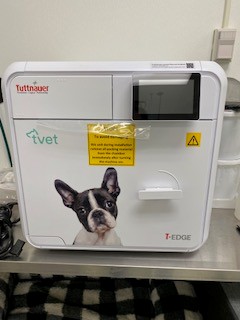
Surgery at the shelter for spays and neuters is a regular occurrence. Every animal that comes into the shelter is scheduled for spay or neuter before they leave for their forever homes. We know that surgery is a complicated medical procedure and reliable surgical equipment is of the utmost importance. In supporting the surgical unit, the shelter director approached me to consider the purchase of a new autoclave unit. Of course, since I have no medical background, the director explained the use of such a unit in the surgical suite. The shelter director explained that the current autoclave unit was beginning to have operating problems. For surgeries, the shelter autoclave needs to be totally functional. She explained to me what the unit does. An autoclave is a machine that uses steam under pressure to kill harmful bacteria, viruses, fungi, and spores on items that are placed inside the pressurized vessel. The items are heated to an appropriate sterilization temperature. At the shelter, the surgery packs are all sterilized in the shelter autoclave. Friends of SCAS made the purchase of an autoclave to make the surgery process safe for all the animals. The new unit is larger than the previous unit and can sterilize more surgery packs in a shorter time frame. The older unit remains in the surgery unit as a back-up for particularly busy surgery days.
Friends is very happy to support the Saratoga County Animal Shelter in their efforts to protect and provide appropriate care of the animals housed there until their new homes are found.